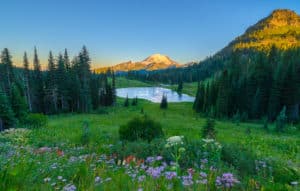
Whether hiking or enjoying a scenic drive through the park these poignantly-beautiful lakes offer the quintessential vista of Mt Rainier. Summer provides views and photo opportunities revealing the extent of the mountains glaciers and snow pack. Summer wildflowers border the Stevens Canyon Road and in fall, the lakes are set off by displays of mountain ash and a harvest of fall color. Winter viewing is equally spectacular when the clouds part for views of Mount Rainier for skiers and snowshoers (don't venture out onto the lakes on foot). The lakes are located off the Stevens Canyon Road and are still accessible by car (or foot) from Paradise.
Perhaps no place on the mountain offers more photo opportunities than the area surrounding the Henry M. Jackson Visitor Center at Paradise. No other setting in the park can compete for views though some visitors might argue that Sunrise should take first place. From the Visitor Center let your eyes follow the flow of the Nisqually Glacier from summit to snout. In summer, stroll the paths above Paradise and view the world famous wildflower meadows and be awed by views of Mount Rainier towering above. Watch (and listen) for marmots in summer and birds year-round including snow-white ptarmigans in winter.
Only the views from Paradise can compete with the vistas from Sunrise Point. Sunrise Point is a large parking area made by the final switchback on the road to Sunrise with views in all directions. In addition to Mount Rainier, take in views to the south including Mount Adams, Mount Hood, The Goat Rocks and to the north, Glacier Peak, Mount Baker, Mount Stuart and more. Closer are views of jagged Governor's Ridge and below Sunshine Point, sparkling Sunrise Lake.
This easily accessible lake lies just below Chinook Pass along Highway 410 and offers visitors abundant parking for views to write home about. The lake sits in a meadow just below Yakima Peak (north) and Naches Peak (south). There's much to entice a photographer; rugged Governor's Ridge, the ancient volcanic plugs of the Cowlitz Chimneys and Mount Rainier shimmering like a mirage under its burden of ice and snow. In summer, it's a must-see area for wildflowers and in autumn, the fall foliage is nothing short of brilliant. As with Sunrise, the road to Chinook Pass closes when significant snow accumulates, sometimes as early as October.
A short walk from the Stevens Canyon Entrance of the Park, the Grove is located on an island in the Ohanapecosh River. This location illustrates how the hemlocks, Douglas firs and cedars located there have survived 1,000 years of fires and humans. With trunks ranging up to 35 feet in diameter the grove feels like a wooden shrine or cathedral. With the racket of civilization seemingly light-years away these trees provide a sanctuary to all who venture here. Trying to capture the full height of these trees is impossible so look for the details; the wonders of new growth along humongous nurse logs, fallen giants who provide the nutrients for the next generation of giants.
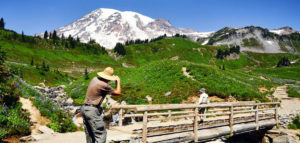
If this is your first visit to Myrtle Falls at Paradise you might recognize the scene from postcards when you first see the sprawling, flower-bedecked meadows above the Henry M. Jackson Visitor Center with Mount Rainier rising above, often wearing a halo of lenticular clouds. Myrtle Falls is a short and easy hike from the Visitor Center and is often featured on calendars. From the scenic bridge that spans Edith Creek a short spur descends to a unique viewpoint of the waterfall under the bridge with Mount Rainier in the background. Photographers often gather there armed with lenses, filters and tripods, waiting for that perfect light. (Be sure to pick up a printed hand-out of the trail system from the Visitor Center for other nearby points of interest.)
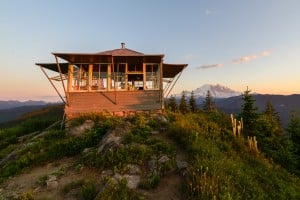
This is a trail literally in the sky between Sunrise Point and Frozen. Starting at Sunrise climb to the T-junction on the Sourdough Ridge trail: head south (toward Mt. Rainier) or explore other trails that can be accessed from Sourdough Ridge including Huckleberry Creek, Fremont Lookout, Berkeley Park and stretches of The Wonderland Trail. Heading north (toward Sunrise Point) you'll find more viewpoints with a better chance of solitude and photo-worthy views in all directions. Spend the day at Sunrise; get there for sunrise or sunset for alpenglow on Mount Rainier. In addition to views, wildflowers bloom early on the road between Sunrise Point and Sunrise as the snow melts.
Unlike Sourdough Ridge at Sunrise you might have Crystal Mountain to yourself, especially during the summer. In winter you'll share the popular Mount Rainier Gondola at the Crystal Mountain Resort with skiers so get an early start. In summer you can hike the trail to Crystal Mountain and ride the Gondola back down to the Crystal Mountain Resort. In addition to views that compel writers to resort to clichés; there's also a gift-shop and the Summit House Restaurant. Views are available year-round.
Waterfalls draw visitors ranging from professional photographers to first-time visitors; Narada Falls is no exception. This thrilling waterfall is located along the Nisqually-Paradise road between Longmire and Paradise. The waterfall has two distinct features: the top tier and tallest at 150 feet is a "horsetail" fall, so described because the multiple channels fan out as they tumble down a rocky cliff (the lower tier plunges into a pool). Reached by a short, but often wet and slippery path, the best views are from below the road. Parking is convenient and for any visitor, especially waterfalls devotees. This waterfall is a must-see.
Waterfall photography tips: Waterfalls are notoriously difficult to photograph. To slow the action of tumbling cascades you can slow the shutter speed on your camera for the "soft" water affect (a tripod is necessary in low-light). To reduce glare and reflections on water use a polarizer lens. To enhance the effects of moving water use a high-shutter speed. If in doubt, "bracket". Take a series of photographs to over or under-expose the subject. Don't be afraid to experiment, its fun.
As one of the most easily accessible waterfalls in Mt. Rainier National Park, Christine Falls offers a signature view in a charming intimate setting. Framed by the historic, arching Christine Falls Bridge, the lower section of the falls is the most photographed section with a short, paved trail leading to a viewpoint. This part of Christine Falls is viewed from the Nisqually-Paradise Road (the parking area is well-designated).
Are you a hiker who takes pictures or are you a photographer who likes to hike? No matter, photo opportunities abound, ranging from a short hike to Spray Falls or the moderately-strenuous hike to Eunice Lake/Tolmie Peak. Even non-hikers will find much to photograph at Mowich Lake; short spurs lead to lakeshore views with subsidiary peaks rising above the lake and the historic Mowich Lake Patrol Cabin (Mowich is the Native American word for "deer"). Photographers will find masses of avalanche lilies bordering the lake as snow recedes. Several other trails will tempt photographers to hike further including the Wonderland Trail to other points of interest, including to a viewpoint of Spray Falls.
Photographers might not get past Sheep Lake, one of the prettiest lakes accessible from Chinook Pass on the Pacific Crest Trail. From Chinook Pass, the Pacific Crest Trail makes a gentle, rising traverse above State Route 410 with views back to Mount Rainier and the American River below. In summer the trail is bordered with wildflowers as is Sheep Lake, situated in a meadow amidst secluded groves of subalpine trees. You can continue on the Pacific Crest Trail to Sourdough Gap with expanding views as you go. Sheep Lake lies below the gap with views to the north along the trail to Noble Knob, Norse Peak and south to The Goat Rocks and Mount Adams.